Key takeaways
- Crash injuries habitually arrive late. Necks, low backs, and rattled heads tend to peak on day two or three, not at the scene.
- Call on day one, not because anything is on fire, but because the exam is more useful the closer it sits to the event.
- The first visit at Missouri Injury Clinic ends in a diagnosis if the findings support one and a written treatment plan.
- Head complaints deserve the same promptness as neck complaints. Say so on the phone so you land in the right lane.
- The emergency line comes first. Everything else on this page assumes you are past it.
The crash itself is over in a second or two. The week that follows is where most of the outcome gets decided, and it is decided mostly by small, unglamorous choices: whether you make a phone call on Tuesday or wait until the pain makes the decision for you on Friday. This entry walks the week in order, for a reader who just got hit somewhere between the I-44 ramps and the Manchester lights and is now sitting in a kitchen in Kirkwood wondering what is supposed to happen next.

Expect to feel better than you are
At the scene, adrenaline does most of the talking. People trade insurance cards, take photographs of bumpers, and drive home feeling shaken but basically fine. That is normal and it is also misleading. The body's stress response is very good at hiding soft tissue strain for a few hours, which is exactly why so many people who say "I was fine" at the scene are not fine by the weekend.
The first evening is for the obvious things. Eat something. Write down what happened while it is fresh: the road, the direction, the rough speed, where the other car hit yours, whether your head touched anything, whether you were braced or surprised. That note is for you and for whoever examines you. It is not a legal document and it does not need to be. It needs to be accurate.
The one non-negotiable on day zero is the emergency line. Chest pain, a sudden severe headache, weakness or numbness on one side, trouble speaking, a loss of bowel or bladder control, or a head injury with vomiting or worsening confusion is an emergency room trip right now, not a call to a clinic. Everything else in this entry assumes you are past that line and on the planned-care side of it. If you are not sure which side you are on, the Journal's bright line entry is written for that exact uncertainty.
Day 1 · MorningThe stiffness shows up
The first morning is when most people meet the injury properly. Necks are the classic case. Whiplash is the plain-language name for a neck strain caused by the head snapping back and forth faster than the muscles could brace for it, and the soreness it leaves tends to peak a day or two after the hit rather than at the moment of impact. Low backs behave the same way after a rear-end hit in a bucket seat, and so do shoulders that were holding a wheel.
Day one is the right day to make the call, not because anything is on fire but because the exam is more useful the closer it sits to the event. Missouri Injury Clinic's Tesson Ferry office is at 11144 Tesson Ferry Road, Suite 200, about fifteen minutes from downtown Kirkwood down Lindbergh, and the number is (314) 530-5480. Every office closes from 12 to 2 daily, so call in the morning or after 2. Say it was a crash and ask for an exam this week.
Plan around the delay instead of being surprised by it: book the exam before the symptoms finish arriving.
Days 2 and 3 · The bloomPain arrives in full
If day one was stiffness, days two and three are usually where the pain blooms. Turning the head to check a mirror becomes a whole-body move. Sleep gets worse. Headaches that started at the base of the skull creep forward. The Journal has a separate essay on why this delay happens, called Three days later, but the short version is that inflammation and muscle guarding take time to build and the body does not send the bill on the day of the crash.
This is also the window where a quietly rattled head becomes noticeable. Fog, irritability, trouble concentrating at work, light bothering you more than it should. None of that requires a blackout to count. If it is present, say so on the phone and again at the exam, because the clinic's concussion lane is a different set of tools than the neck lane and you want to be in the right one. The Journal's entry on Friday night heads is about exactly this.
Days 3 to 7 · The examWhat the visit settles
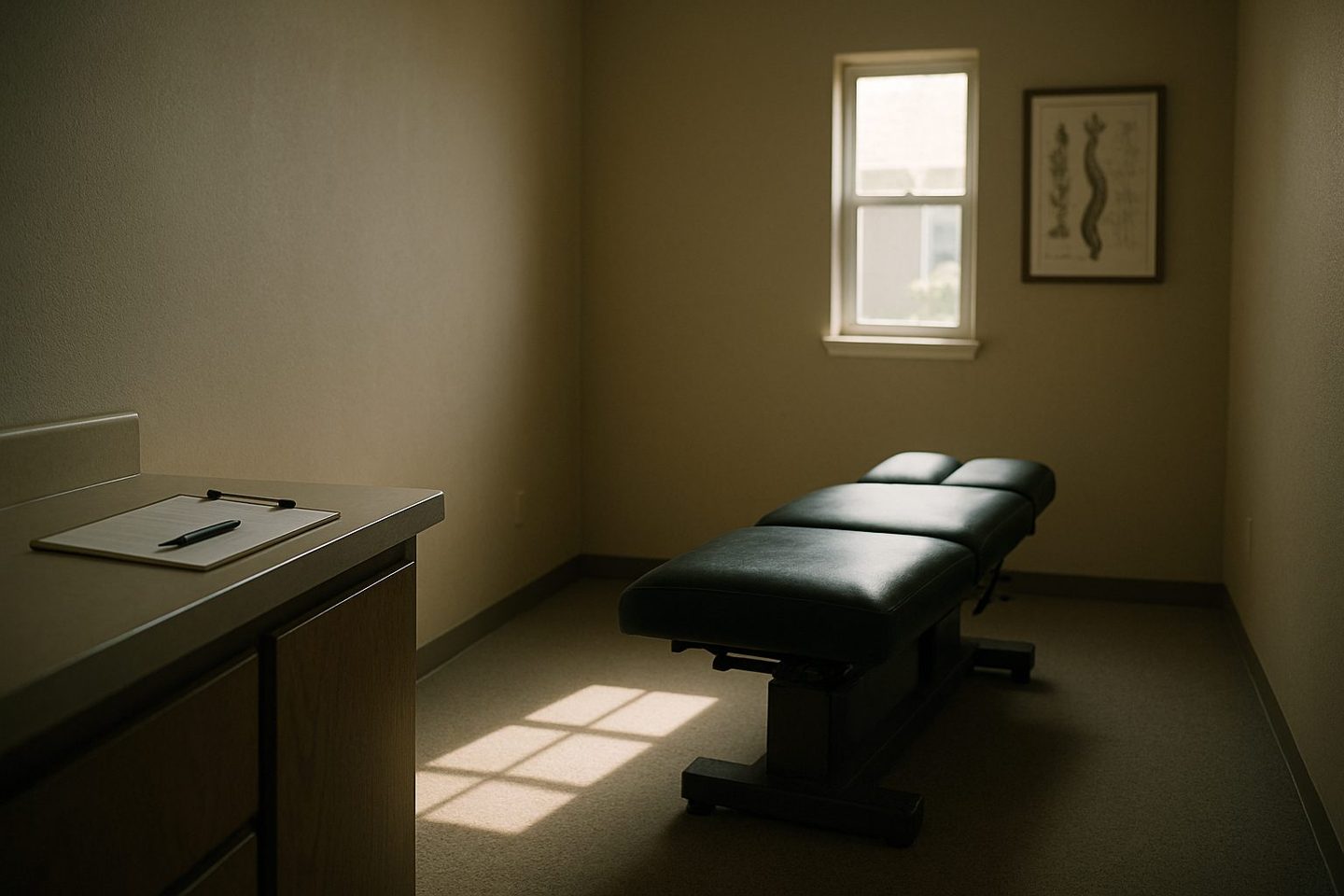
The first visit at Missouri Injury Clinic covers the crash history, a hands-on exam with an exam of how the neck and back move, and ends with a diagnosis if the findings support one and a written treatment plan. You leave knowing what is injured and what happens next. If nothing is injured, you leave knowing that instead, which is also worth the trip, because an honest "you are fine" on day four is a better foundation for the rest of the month than an anxious guess.
Bring your note from the first evening, your insurance information, and whatever paperwork the crash generated. If you already have an attorney, bring their contact so records can be sent where they need to go. You do not need to have decided anything about a claim before you get examined, and the clinic does not need you to. The visit is a care visit. The getting seen entry covers the mechanics in more detail.
Follow the plan, not the pain
A written plan has a shape: what to do, how often, and what should change by when. Follow the shape. The temptation in week two is to skip visits on good days and panic on bad ones, which turns a plan into a mood. If the plan said two weeks and you are not better in two weeks, that is information, not failure, and it belongs in the next visit.
The Journal's standing advice is easy to remember because it is one sentence: an exam this week beats a guess this season. The rest of this site is detail, and the detail is here when you want it.
The one action
Handle the next seven days well.
Call the Tesson Ferry office in the morning or after 2, say it was a crash, and ask for an exam this week. Leave with findings and a written plan.
Tesson Ferry office · 11144 Tesson Ferry Rd, Suite 200
Mon to Thu 9 to 6, Fri 9 to 12, closed 12 to 2
The emergency line, first. Chest pain, a sudden severe headache, weakness or numbness on one side, trouble speaking, a loss of bowel or bladder control, or a head injury with vomiting or worsening confusion is an emergency room trip right now, not a call to a clinic.
Advertising disclosure. This page is advertising. This desk is compensated for featuring Missouri Injury Clinic, and it is not the clinic, not a law office, and not a party to anyone's insurance claim. We publish only the lanes, offices, and hours the clinic publishes on moinjuryclinic.com. We do not write reviews, rank providers, or give medical or legal advice.
Educational reading. Not medical advice, not a diagnosis. The Journal cannot examine anyone.